
Cities across the United States are facing an increasingly complex challenge.
Population growth is accelerating, housing demand continues to rise, and yet housing supply consistently lags behind.
This disconnect is often framed as a political issue, a market failure, or a budget problem. In reality, it is something more fundamental:
Cities are being asked to manage growth without enough entitlement capacity to do it effectively on their own.
While municipalities control zoning, land use, and approvals, the scale and complexity of modern development has outgrown the ability of public planning departments to manage every step alone. As a result, housing shortages persist not because cities lack intent, but because they lack sufficient bandwidth, resources, and coordination.
This is where private entitlement partners play a critical role.
The Reality Cities Are Facing Today

Most cities want growth that is:
- Thoughtful
- Economically sustainable
- Aligned with infrastructure
- Supportive of workforce housing
- Accepted by the community
At the same time, cities are under pressure from:
- Rapid population migration
- Aging infrastructure
- Limited planning staff
- Environmental and regulatory complexity
- Public opposition to density
- Budget constraints
Planning departments are expected to evaluate increasingly sophisticated development proposals, often with limited staff and limited time.
The result is predictable:
- Approval backlogs
- Inconsistent guidance
- Delayed projects
- Developer frustration
- Land sitting idle
- Housing shortages worsening
This is not a failure of public servants.
It is a capacity issue.
Why Housing Shortages Are Not Just a Construction Problem
Housing shortages are frequently blamed on builders or market forces. However, construction is only the final stage of a much longer process.
Long before a home is built, land must be:
- Studied
- Planned
- Zoned appropriately
- Engineered
- Entitled
- Approved
If this front-end process breaks down, housing never reaches the construction phase.
In many cities, land exists but is not entitlement-ready. Without clear approvals for density, infrastructure, and use, developers cannot move forward, even when demand is strong.
This is why housing shortages often exist alongside undeveloped or underutilized land.
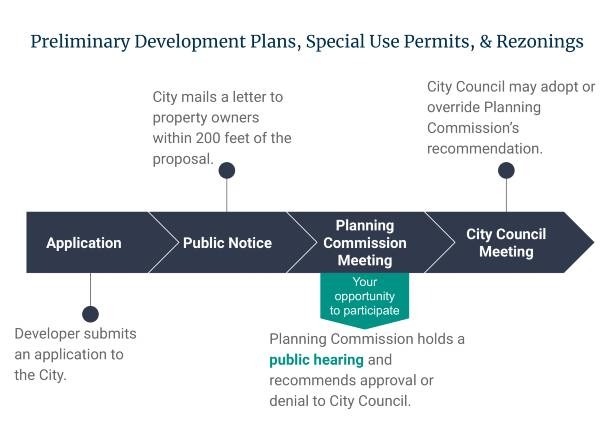
The Entitlement Bottleneck
Entitlements are the quiet gatekeepers of housing supply.
They determine:
- How many homes can be built
- What type of homes can be built
- Where infrastructure must be extended
- How communities are shaped
- Whether projects are financeable
When entitlement processes are slow, unclear, or inconsistent, developers hesitate. Financing becomes difficult. Builders walk away. Housing supply stalls.
Cities often recognize the problem but lack the internal capacity to proactively guide projects from concept to approval.
Why Cities Cannot Do It Alone
Municipal planning departments are tasked with:
- Reviewing applications
- Ensuring compliance
- Managing public input
- Protecting long-term planning goals
What they are not typically resourced to do is:
- Prepare landowners for entitlement readiness
- Conduct detailed feasibility analysis on private land
- Align development economics with housing policy goals
- Coordinate early-stage engineering and infrastructure planning
- Translate market realities into approvable plans
As development complexity increases, cities increasingly need private partners who can work upstream, before projects reach formal approval stages.
The Role of Private Entitlement Partners
Private entitlement partners operate in the space between landowners, developers, and municipalities.
Their role is not to override city authority, but to support it by preparing projects in a way that aligns with public goals and regulatory requirements.
Effective entitlement partners help:
- Reduce incomplete or unrealistic applications
- Identify infrastructure constraints early
- Align density with policy objectives
- Address environmental and FEMA considerations upfront
- Improve the quality of proposals cities review
- Reduce approval timelines through preparation, not pressure
This leads to better outcomes for everyone involved.
Why This Matters for Workforce Housing
Workforce housing is especially sensitive to entitlement constraints.
In many markets, workforce housing requires:
- Higher density
- Smaller lot configurations
- Multi-unit or mixed-use formats
- Infrastructure coordination
- Community integration
Without proactive entitlement planning, these product types struggle to move forward, even when cities want them.
Private entitlement partners help translate workforce housing goals into feasible, approvable development plans.
The Cost of Not Using Entitlement Partners
When cities lack private entitlement support, the consequences compound:
- Housing approvals slow
- Planning staff become overextended
- Developers disengage
- Landowners sell prematurely or hold land indefinitely
- Housing supply falls further behind demand
- Community frustration increases
Housing shortages are not solved by good intentions alone.
They are solved by execution.
A More Collaborative Model for Growth
The most effective growth models are collaborative.
In these models:
- Cities define policy and long-term vision
- Private entitlement partners prepare land responsibly
- Developers build within clear frameworks
- Communities see well-planned growth
This division of responsibility allows cities to focus on governance and oversight, while private partners handle complexity and preparation.
Why Private Entitlement Partners Improve Outcomes
Cities that work alongside experienced entitlement partners often see:
- Higher quality applications
- Faster approval cycles
- Better alignment with comprehensive plans
- Reduced conflict at public hearings
- More predictable housing delivery
- Improved trust between public and private sectors
The goal is not to accelerate growth recklessly, but to manage it intelligently.
Where PropInvest-ROI Fits
PropInvest-ROI operates as a private entitlement partner in high-growth markets where housing demand, infrastructure constraints, and regulatory complexity intersect.
By working early in the development lifecycle, PropInvest-ROI helps:
- Evaluate land feasibility before formal submissions
- Align development concepts with municipal priorities
- Coordinate entitlement strategy across zoning, infrastructure, and environmental considerations
- Prepare projects that cities can review with confidence
- Reduce uncertainty for builders and communities
PropInvest-ROI does not replace city planning.
It complements it.
The focus is on preparation, alignment, and long-term value creation rather than short-term speed.
Final Thought
Housing shortages are not the result of a single failure.
They are the result of systems that are no longer designed for the scale and complexity of modern growth.
Cities need partners who can operate upstream, reduce friction, and help translate policy goals into real, buildable outcomes.
Private entitlement partners are no longer optional.
They are essential to solving the housing challenges of the next decade.
PropInvest-ROI
Focused on entitlement-driven land strategy in high-growth markets.
Supporting cities, landowners, and developers through clarity, coordination, and responsible planning.

